
Humans Love Circles
The science irrefutably proves it! From our first memories, our view of the world, and how we move through it — circles are there. But beyond childhood, this shape becomes more rare (and often less colourful), but the benefits remain.
“We evolved an unconscious sense of caution around [sharp] shapes, whereas curves set us at ease.”
Play - An Aesthetic of Joy
Ingrid Fetell Lee’s work on this is just too good to paraphrase, so here’s part of her transcript from her TedTalk, where she discovers patterns of objects that have been proven to illicit the feeling of joy within humans from all over the world:
”And what about all those round things I noticed? Well, it turns out neuroscientists have studied this, too. They put people into fMRI machines, and they showed them pictures of angular objects and round ones. And what they found is that the amygdala, a part of the brain associated in part with fear and anxiety, lit up when people looked at angular objects, but not when they looked at the round ones. They speculate that because angles in nature are often associated with objects that might be dangerous to us, that we evolved an unconscious sense of caution around these shapes, whereas curves set us at ease.
You can see this in action in the new Sandy Hook Elementary School. After the mass shooting there in 2012, the architects Svigals + Partners knew that they needed to create a building that was secure, but they wanted to create one that was joyful, and so they filled it with curves. There are waves running along the side of the building, and these squiggly canopies over the entryway, and the whole building bends toward the entrance in a welcoming gesture.”
Images (and article) can be found here.
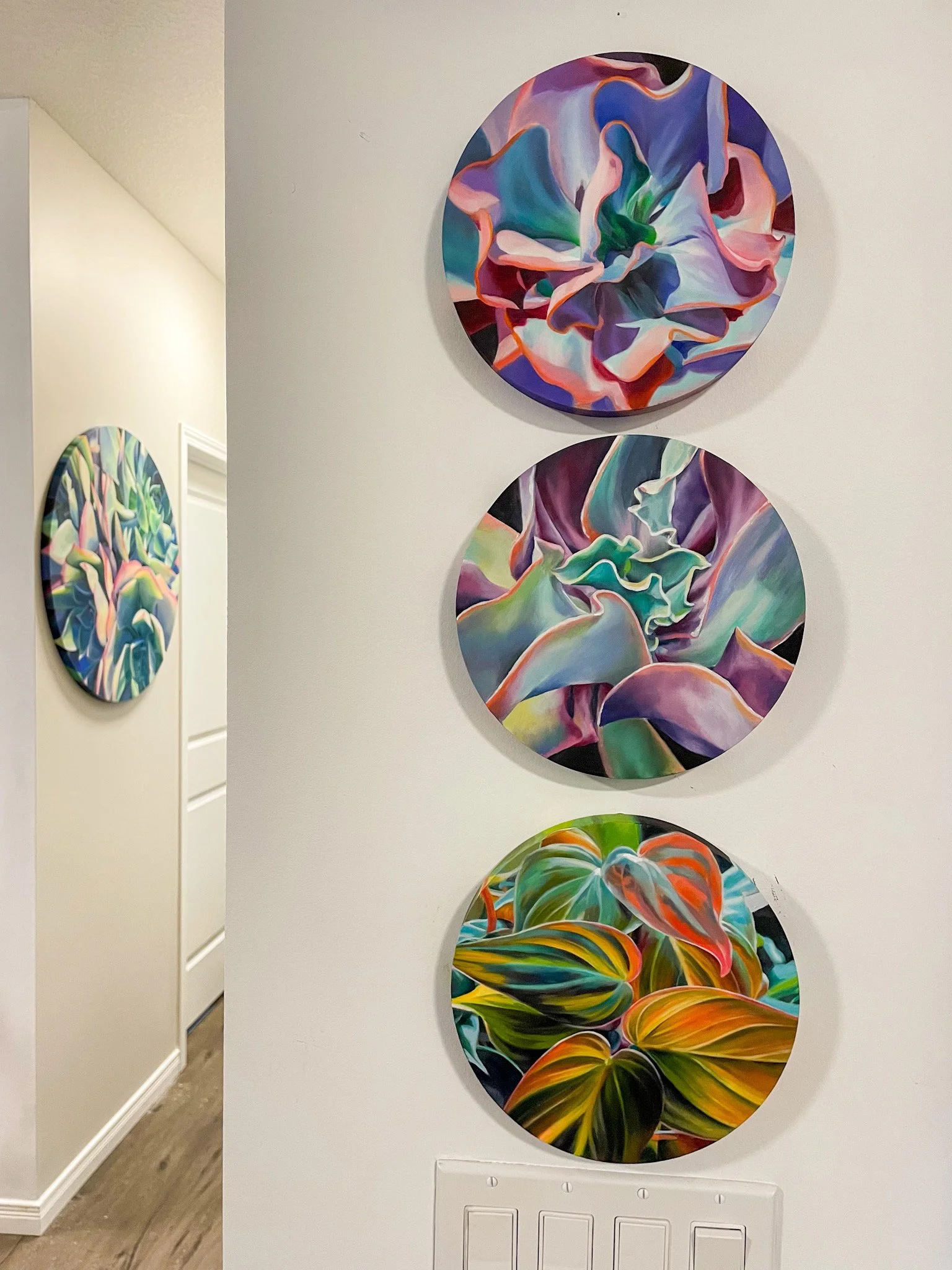
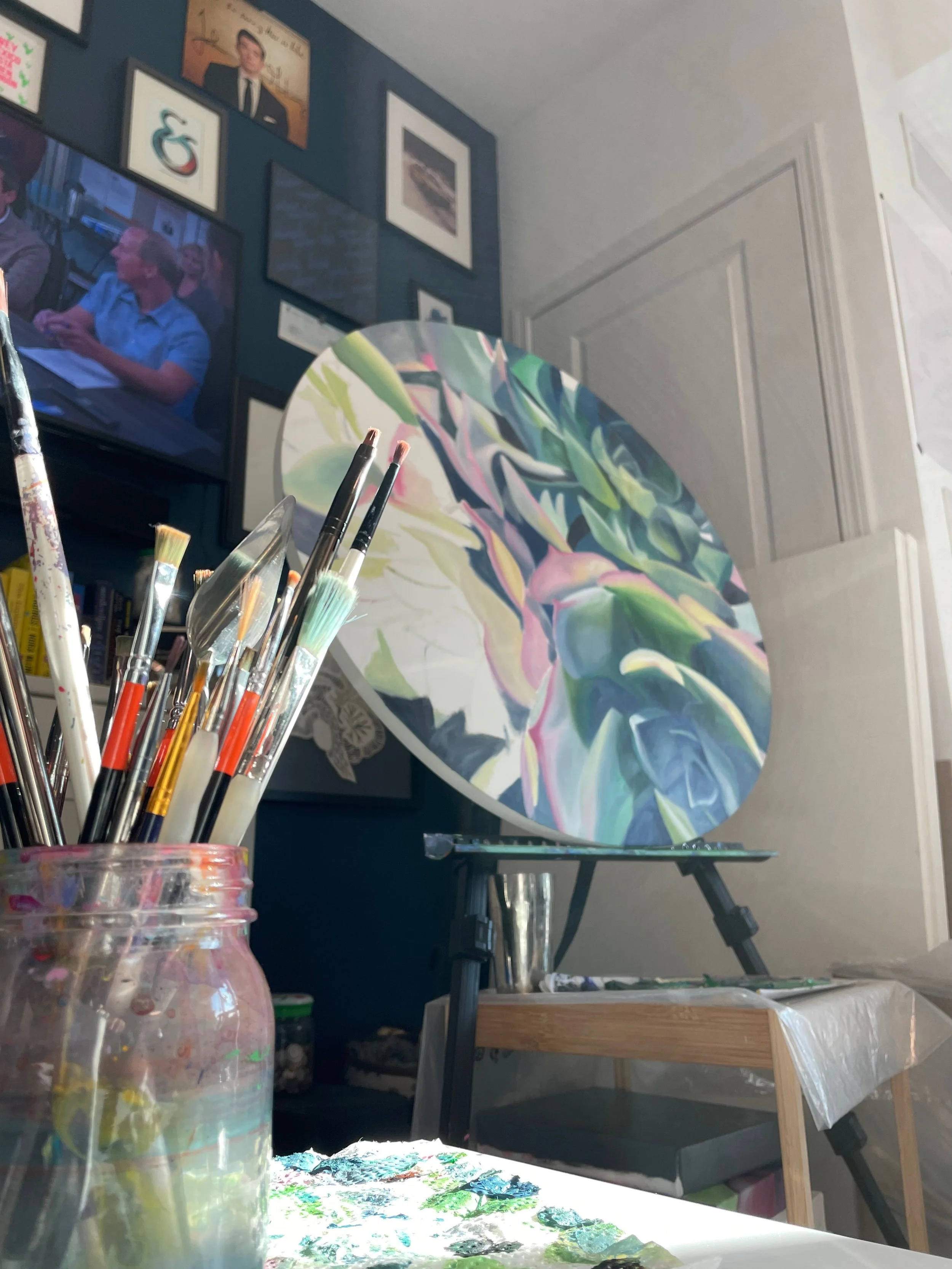
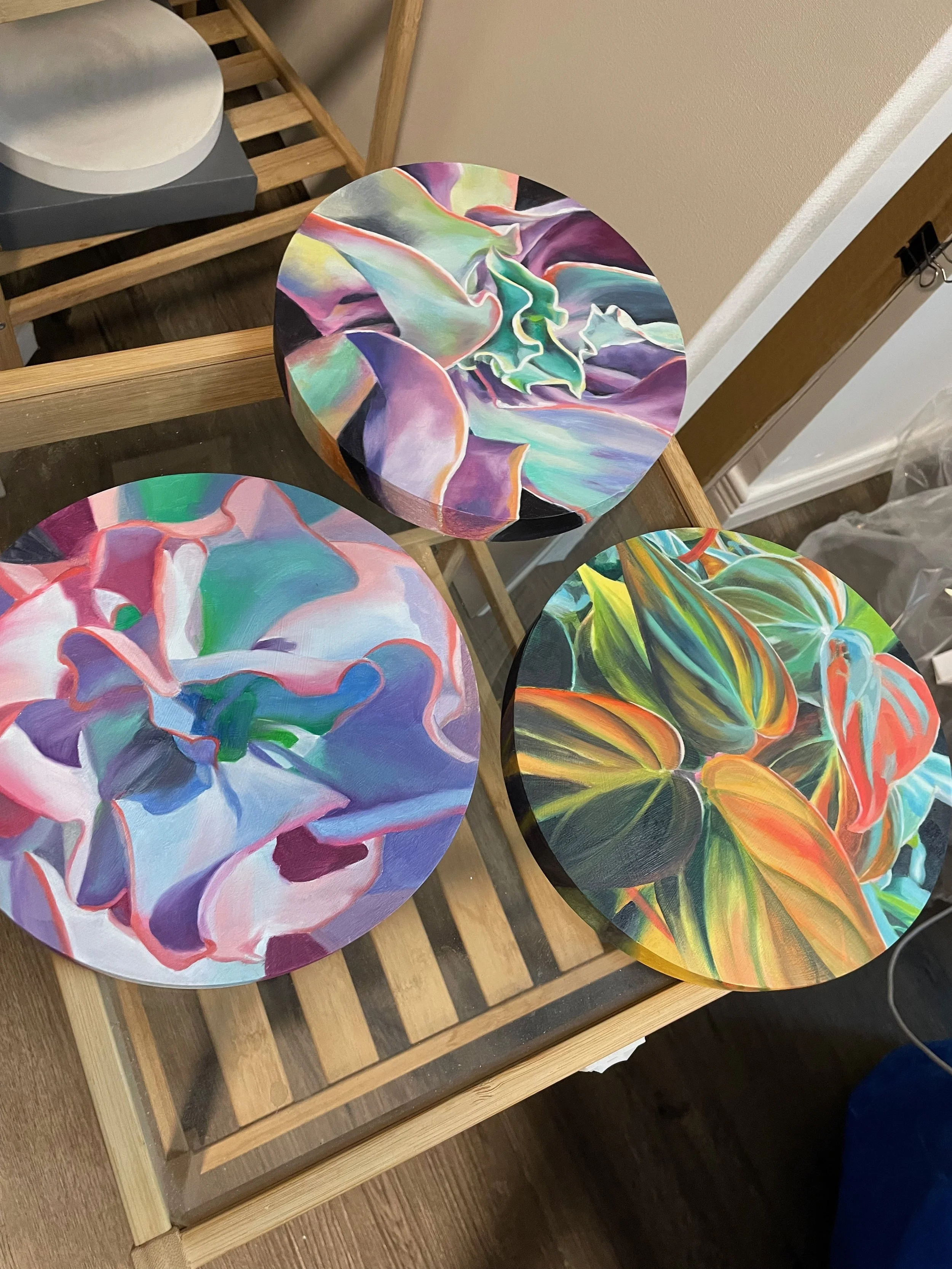
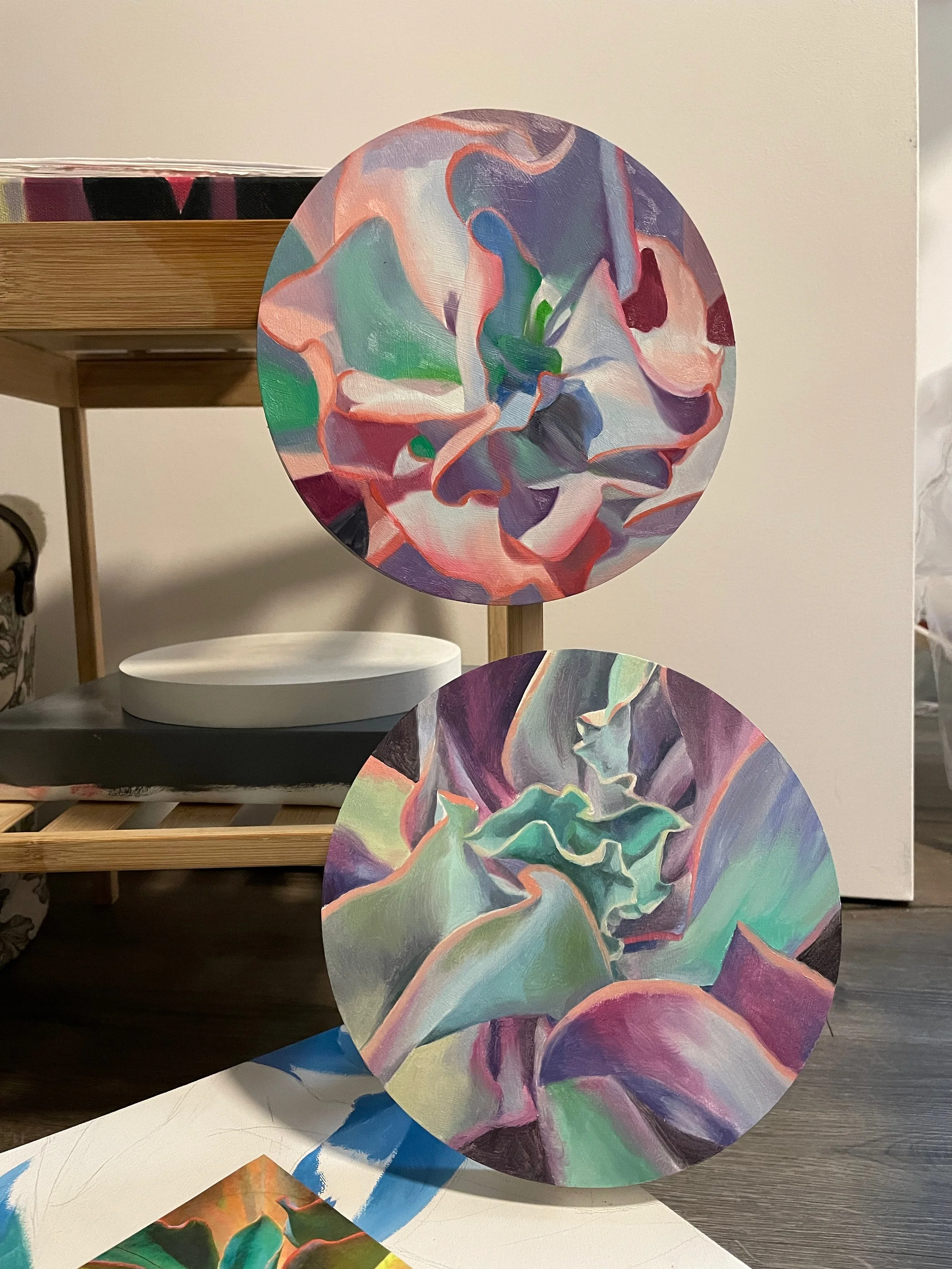
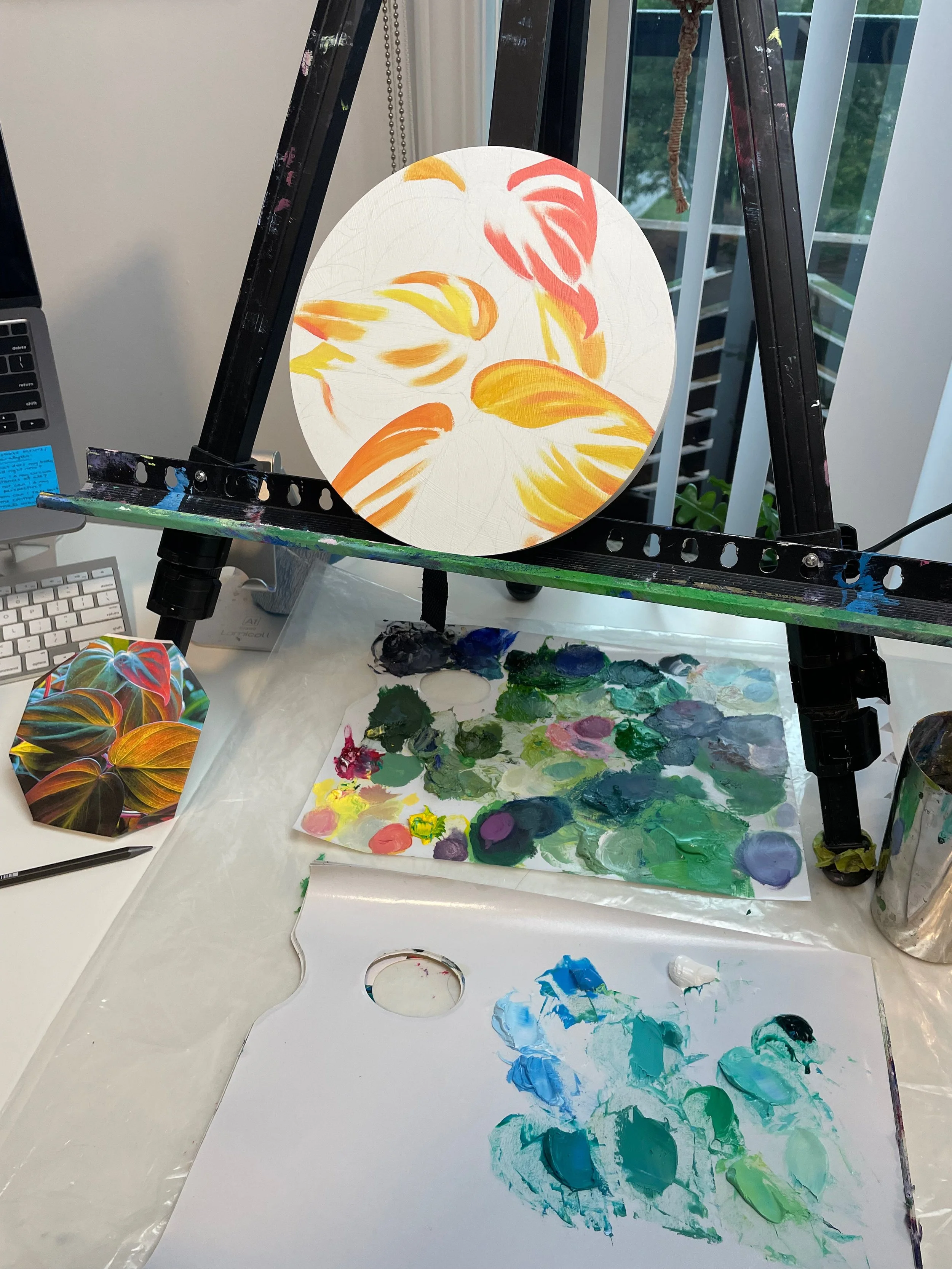
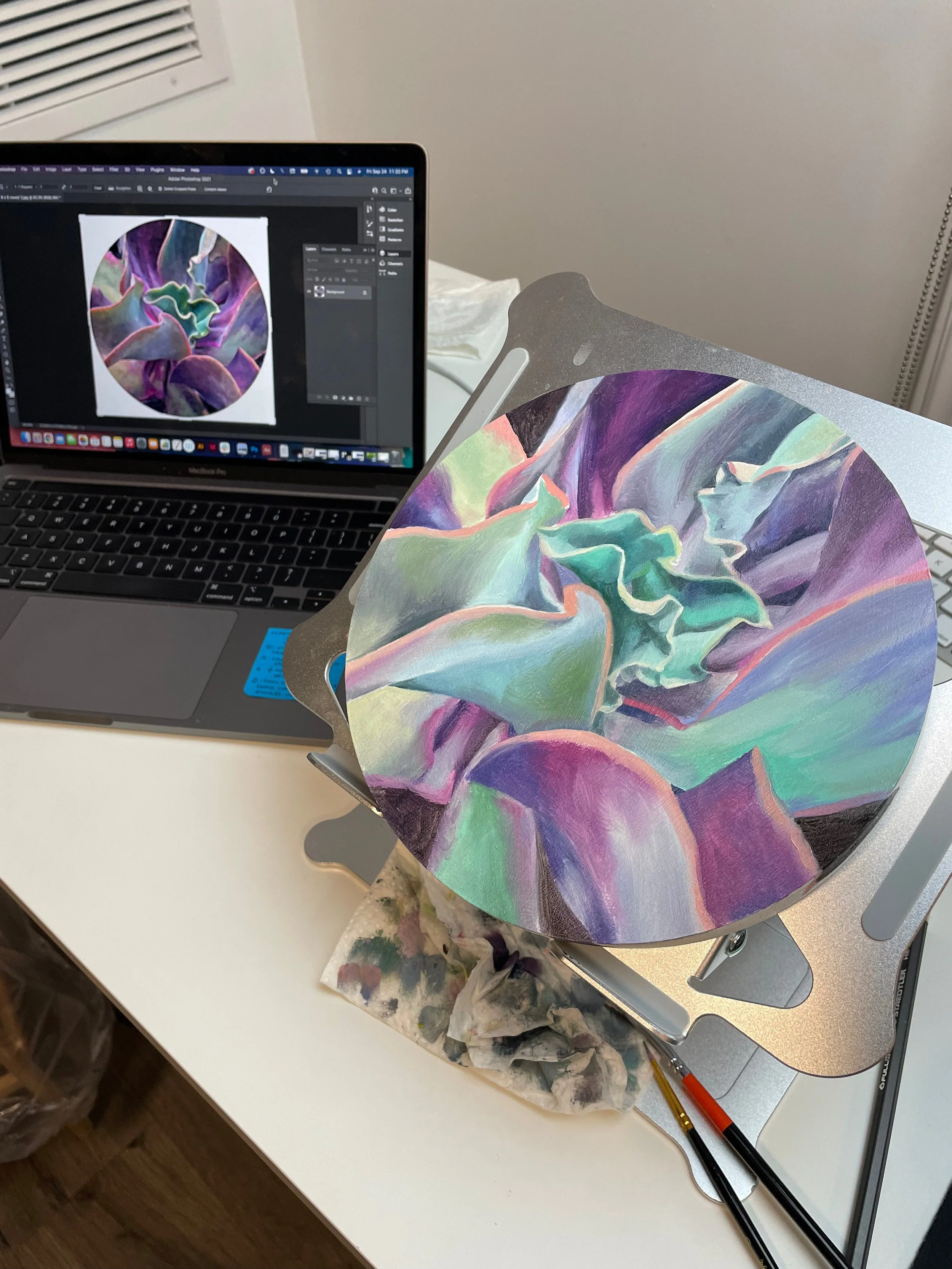
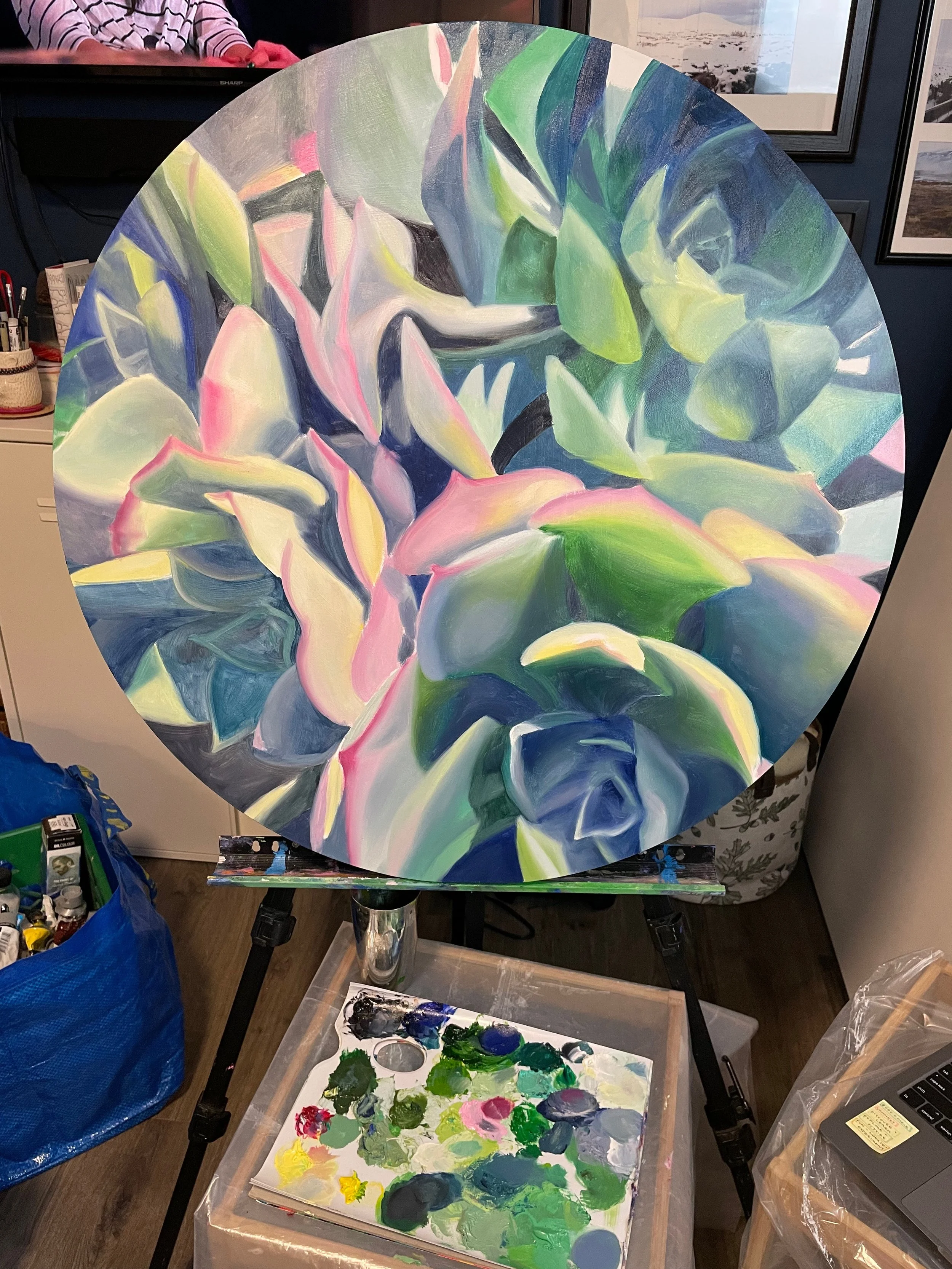
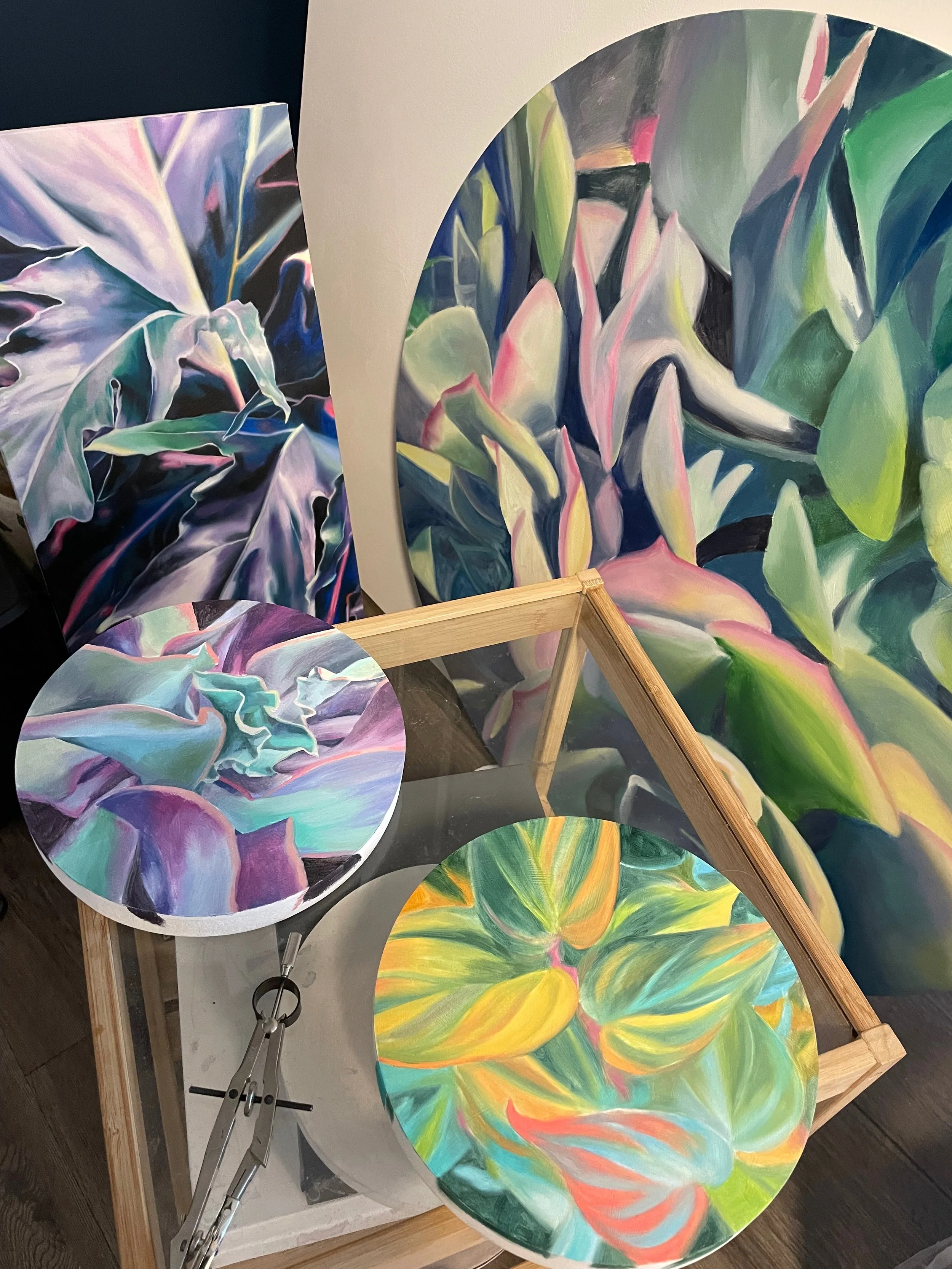
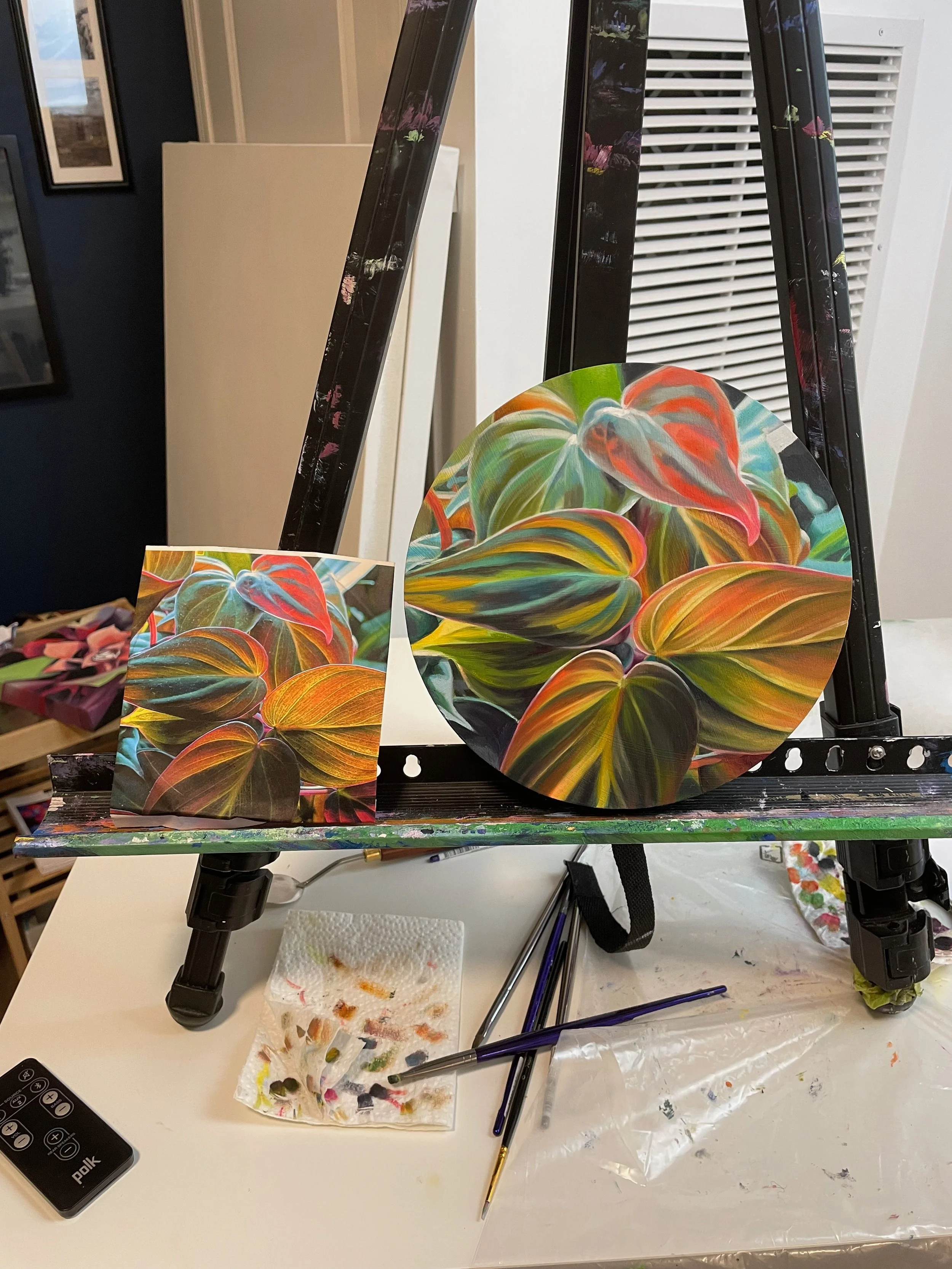
So I went shopping for some new art supplies: round substrates on which to paint some joyful, natural forms!

Decreasing stress from a neurochemical level seemed like a great place to start. No more threatening corners! I figured if I wanted to make stress-reducing artwork, it would have to start there. Read more about the research of curves vs. corners here.
Behind the scenes of these circles